
Introduction: The New SEO Imperative
While paid ads provide immediate feedback, organic search (SEO) remains the holy grail of highly profitable, evergreen traffic. However, the rules of SEO have fundamentally shifted. Google's algorithm no longer just reads your keywords; it rigidly grades your user experience. With the introduction of Core Web Vitals, Google officially made technical performance a direct ranking factor. If your landing page is slow, jumpy, or unresponsive, Google will suppress your organic reach. Here is why dynamic sites fail this test, and how Static Funnels act as the ultimate cheat code for SEO domination.
Deconstructing Core Web Vitals
Core Web Vitals are three highly specific, measurable metrics that simulate a user's frustration level. You must score in the 'green' zone for all three to get an algorithmic boost.
- LCP (Largest Contentful Paint): Measures loading performance. How long does it take for the largest image or text block in the hero section to become visible? Google demands this happens in under 2.5 seconds.
- INP (Interaction to Next Paint): Measures responsiveness. When a user clicks a button or opens an accordion, how fast does the page react? Heavy background scripts destroy this metric.
- CLS (Cumulative Layout Shift): Measures visual stability. Does the text suddenly jump down the screen because a slow-loading image finally rendered? Google penalizes this severely, requiring a score below 0.1.
Why Dynamic Funnels Fail the Test
Platforms like WordPress are inherently ill-equipped to pass these metrics without massive, expensive developer intervention.
For LCP, the dynamic server's 'think time' (TTFB) means the browser is stuck waiting. By the time the HTML is generated and sent, half of your 2.5-second budget is already gone.
For INP, the heavy JavaScript injected by various plugins blocks the browser's main thread. If a user tries to click your CTA while the browser is busy parsing a bloated analytics script, the button will feel frozen or dead.
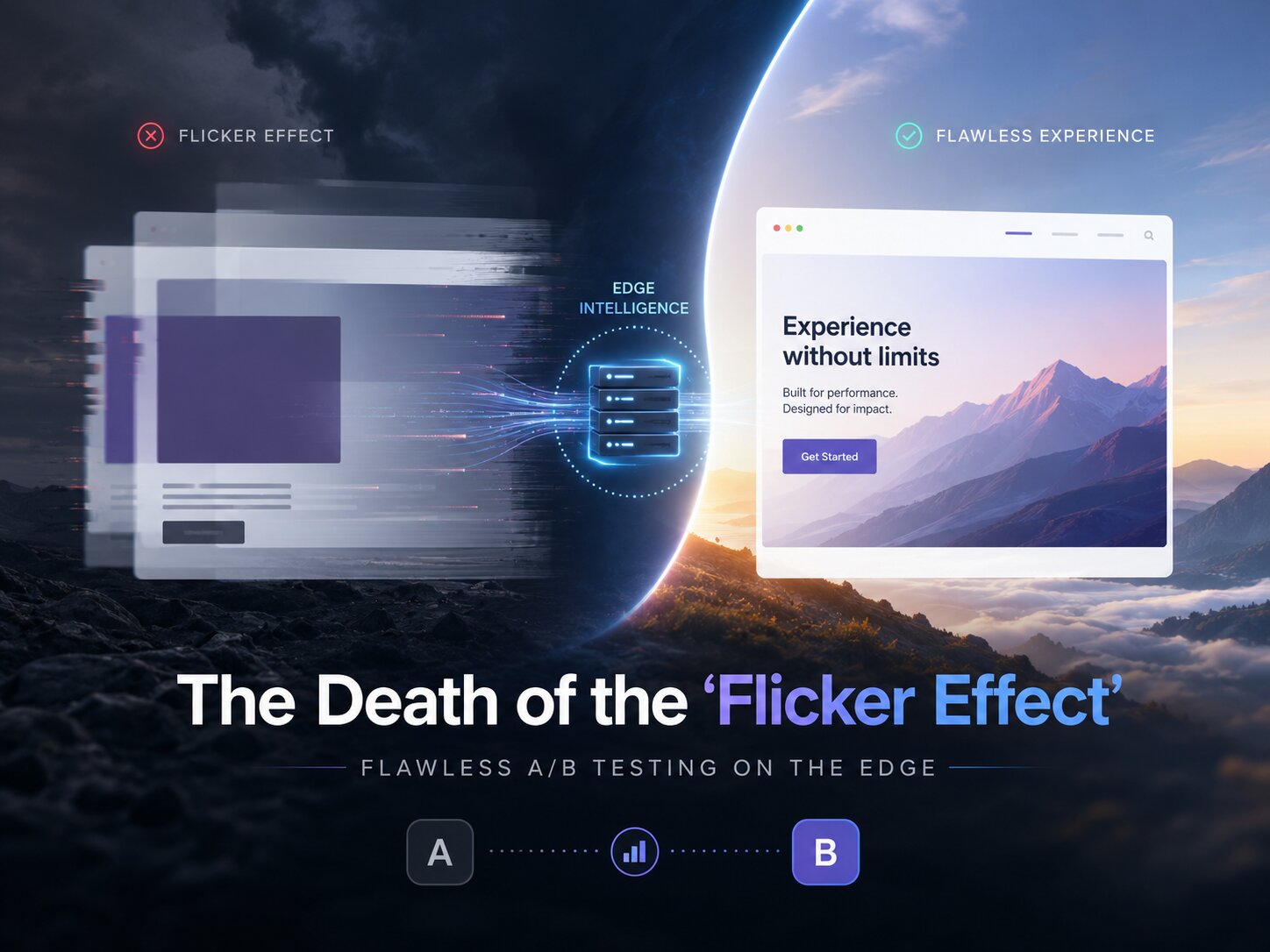
For CLS, dynamic themes often load structure and styles asynchronously. Images load without predefined dimensions, violently shoving text out of the way as they render, resulting in a disastrous layout shift score.
The Static Funnel 'Green Light' Advantage
Static architecture is fundamentally aligned with modern browser rendering engines, making perfect Web Vitals effortless.
1. Instant LCP: Because the HTML is pre-rendered and sitting on a local CDN edge node, the TTFB is almost zero. The browser immediately receives the markup and begins painting the screen instantly. Your hero image is visible before a dynamic server would have even finished its database query.
2. Flawless INP: Static Funnels promote a lean code philosophy. Stripped of backend bloat and unnecessary plugin frameworks, the browser's main thread remains completely free. Interactions are handled with buttery-smooth, millisecond precision.
3. Zero CLS: During the static build process, image dimensions and layout structures are strictly defined. The browser knows exactly how much space to reserve for every element before it even downloads them. The page loads locked in place, with zero visual shifting.
Conclusion: Stop Fighting the Algorithm
Trying to optimize a bloated dynamic CMS for Core Web Vitals is like trying to make a tractor win an F1 race by adding aerodynamic spoilers. A Static Funnel, however, is a purpose-built race car. By guaranteeing perfect technical SEO scores, you stop fighting Google's algorithm and start letting it push your business forward.